
Inventory and warehouse use
Barcode and QR labels can identify products, cartons, stock locations, storage bins, dispatch units and warehouse items.
Barcode & QR Labels in Pune
Miraa Labels supports barcode and QR label requirements for products, cartons, inventory, warehouses, dispatch, batch identification, serial tracking and repeat B2B workflows.
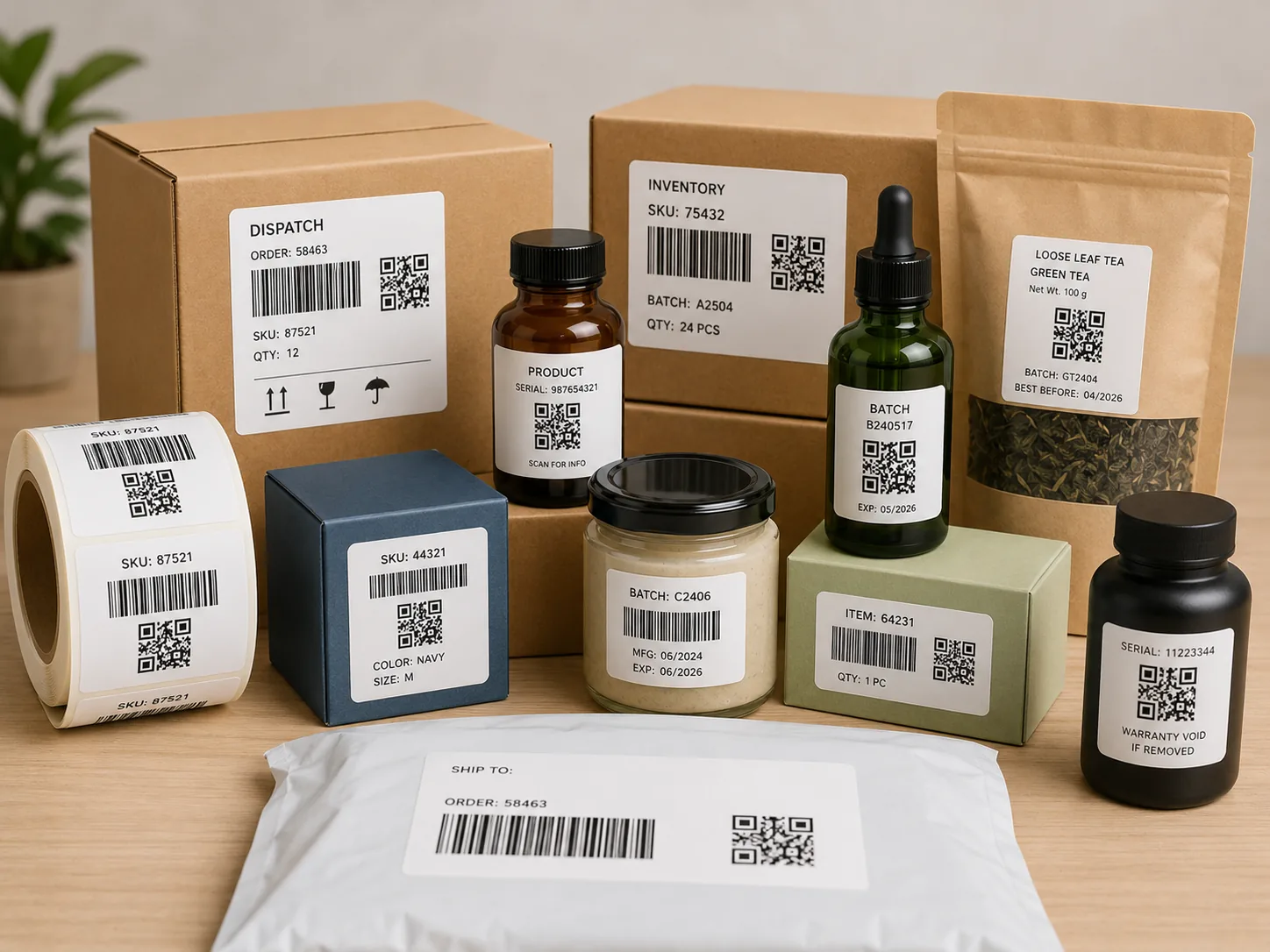
Suitable For
Barcode and QR labels support scanning, identification, stock movement and traceability across products, cartons, warehouses and dispatch operations.
Identification & Tracking Labels
Barcode and QR labels are used when products, cartons, inventory, batches, locations or shipments need to be identified and scanned.
Although these labels may look simple, code size, print clarity, artwork placement, material, scanning conditions and data format can all affect the final result.
For B2B customers, it is also important to confirm whether every label uses the same code or whether the data changes from one label to the next.
Common Applications
These labels are used across factories, warehouses, packaging lines, retail operations, logistics processes and product supply chains.
Barcode and QR labels can identify products, cartons, stock locations, storage bins, dispatch units and warehouse items.
Labels can carry product codes, batch references, serial numbers, QR codes and other identification information.
Useful for parcel labels, carton labels, dispatch workflows and movement of goods between factories, warehouses and customers.
Scanning & Readability
A code should remain readable after printing, application, handling and storage. The correct size and placement depend on the available label area and the way the code will be scanned.
Clear space around the code, suitable contrast and practical artwork placement help reduce avoidable scanning problems.
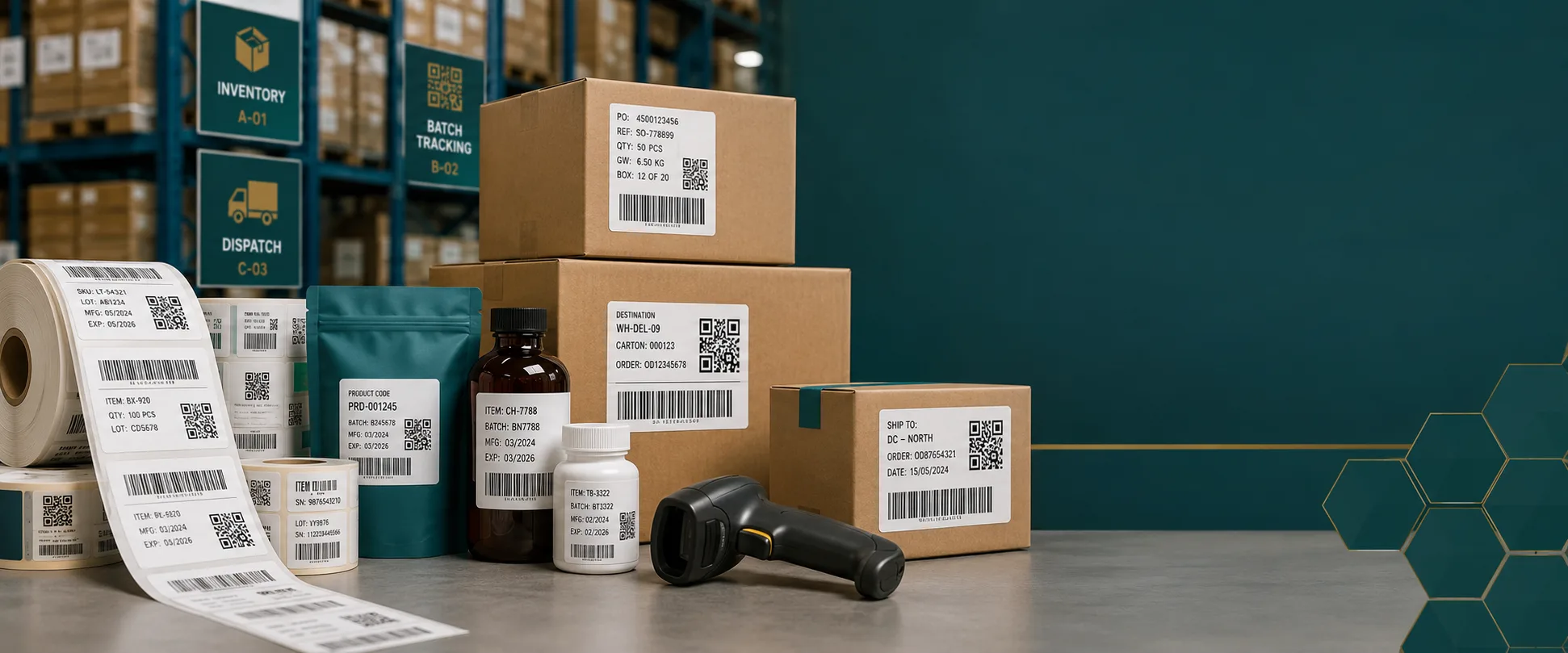
Planning Points
The label should be planned as part of the complete workflow rather than treating the barcode or QR code as an isolated artwork element.
The barcode or QR code must fit the available label area while remaining clear enough for the intended scanner and scanning distance.
The artwork should leave suitable clear space around the code and avoid nearby design elements that may interfere with reliable scanning.
Material, print quality, application surface and handling conditions can affect whether the code remains readable after the label is applied.
Static & Variable Data
The production approach depends on whether every label repeats the same information or each label needs a different value.
Every label carries the same barcode, QR code or product information. This may suit repeated product, location, pricing or identification requirements.
Individual labels carry changing information such as serial numbers, batch numbers, product codes, unique QR values, dispatch IDs or inventory references.
How to Enquire
Start with the application and data requirement, then confirm the label dimensions, artwork, format and expected scanning conditions.
Explain whether the label is for a product, carton, warehouse location, inventory item, dispatch unit, retail application or another workflow.
Confirm the barcode or QR type and whether every label repeats the same information or requires changing data.
Share the label size, artwork, quantity, roll or sheet format and scanning requirement so the job can be reviewed clearly.
Quote Information
Sharing these details early helps distinguish a straightforward repeated-code requirement from a variable-data, batch, serial or traceability workflow.
Need Barcode or QR Labels?
Miraa Labels can review your barcode, QR, inventory, dispatch, batch, serial or traceability-related label requirement and guide the next step.